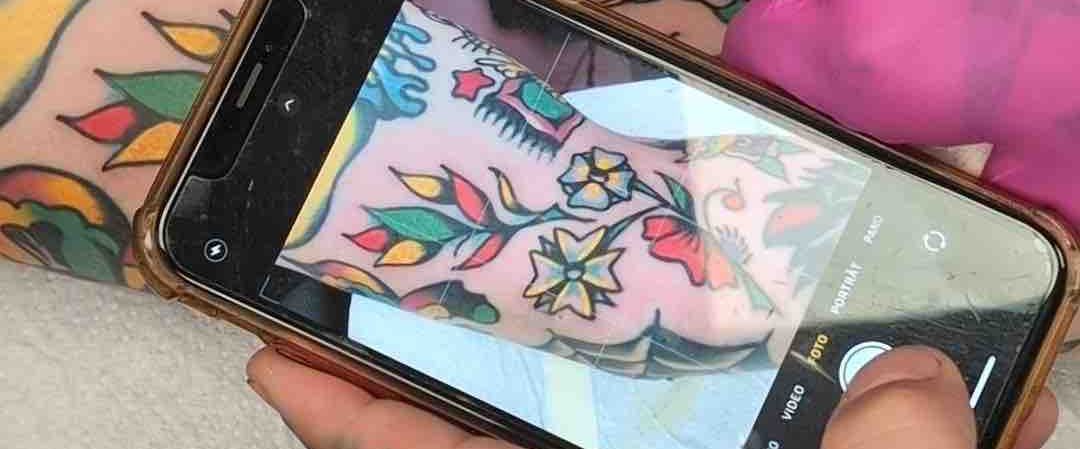
The Definitive Guide to American Traditional Tattoos in Berlin
An American traditional tattoo is a style of permanent body art defined by heavy black outlines, a restricted primary color palette, and iconic maritime or military-inspired symbolism. In Berlin, this style is upheld by craftsmen like Mariano, who prioritize the technical "Bold Will Hold" philosophy to ensure tattoos remain legible and vibrant for a lifetime.
American traditional tattoos in Berlin are everywhere right now, but very few studios actually understand the weight of the history behind the ink. Traditional tattooing is not a trend to be "curated" for a season; it is a visual language built over more than a century. It was shaped by sailors, outsiders, and craftsmen who believed that a tattoo should be clear, honest, and built to survive the elements.
At its core, American traditional tattooing follows a strict set of rules. These rules were not invented to limit creativity. They exist because tattooing happens on living, changing skin—not paper. Masters like Sailor Jerry, Don Ed Hardy, Paul Rogers, Bert Grimm, and Owen Jensen understood that for a tattoo to age well, it needs structure. Mariano is a traditional tattoo artist in Berlin who continues this lineage, offering work that respects the heritage of the craft.
The Lineage of the Masters: Why History Dictates the Future
To understand a traditional tattoo, you must understand the hands that first drew them. The "Old School" style we see in Berlin today is a direct descendant of the mid-20th-century American "Golden Age." This was a time when tattooing was underground, often illegal, and reserved for those on the fringes of society.
- Bert Grimm: Often cited as one of the greatest to ever hold a machine, Grimm’s career spanned the legendary Nu-Pike in Long Beach. His designs—like the Sundancer or his specific take on the Tiger—are the blueprints for what we consider "Classic" today. Grimm believed in the power of the "Simplified Form," a philosophy Mariano utilizes to ensure every tattoo has maximum impact from a distance.
- Owen Jensen: A master of both tattooing and machine building, Jensen’s work was characterized by a certain "folk art" charm and massive, powerful compositions. His contribution to the technical side of the industry—building machines that could drive heavy needles into tough skin—is why we can achieve those signature bold lines today.
- Sailor Jerry Collins: Perhaps the most famous name in the craft, Collins revolutionized the technical side. You might know his name from the famous Sailor Jerry Rum. But he was more than this; he was a pioneer who studied Japanese Irezumi techniques to improve American pigments. He was responsible for introducing purple and cyan and refined the "bold line" to a science, ensuring designs didn't "blur" into unrecognizable shapes after twenty years.
- Don Ed Hardy: The man who bridged the gap. Hardy’s mentorship under Sailor Jerry and his subsequent study in Japan brought a level of sophistication and large-scale composition to American Traditional that defines the modern "Power-Classic" style. Ed Hardy isn’t just a fashion brand; he is a scholar of the medium who proved that traditional motifs could be elevated to fine art without losing their "street" grit. Ed Hardy is also known for developing tattooing as a form of art piece in the body, inspired by the Japanese tattoo artists and tradition.
- Paul Rogers: Franklin Paul Rogers (1905–1990), often called the "Father of American Tattooing", was one of the most influential figures in the history of the craft. His career spanned over 60 years, during which he transformed tattooing from a side-show curiosity into a refined technical discipline.
- Tony Polito: The one known by name only by the real tattoo nerds. Tony Polito's work shaped what we today see as New York style in American traditional tattooing.
The Iconography: A Deep Dive into Classic Motifs
In traditional tattooing, a design is never just a decoration. Each motif carries a name, a lineage, and a history. When you choose a piece from Mariano’s flash or request a custom commission, you are stepping into a specific story. Here are the "Heavy Hitters" of the traditional world:
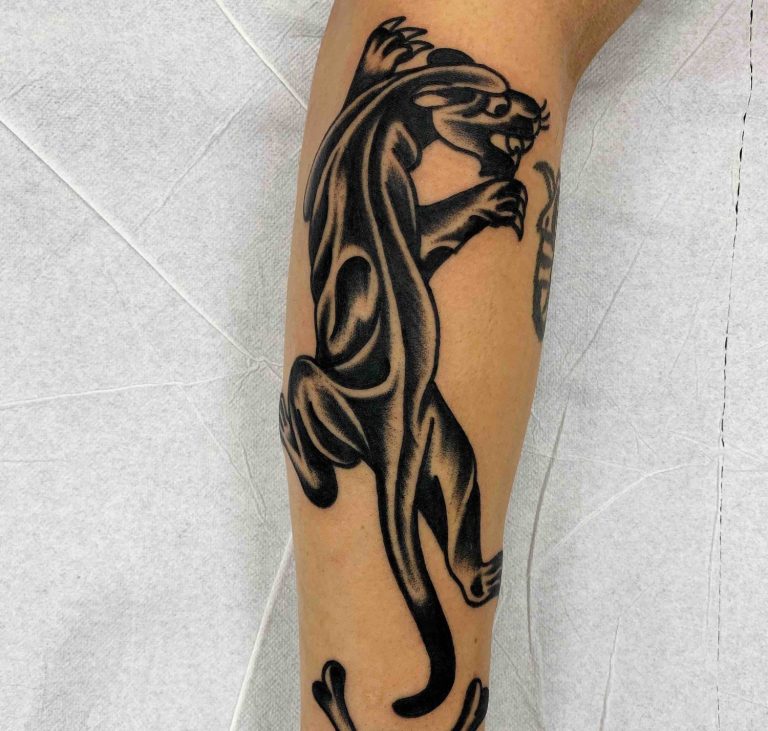
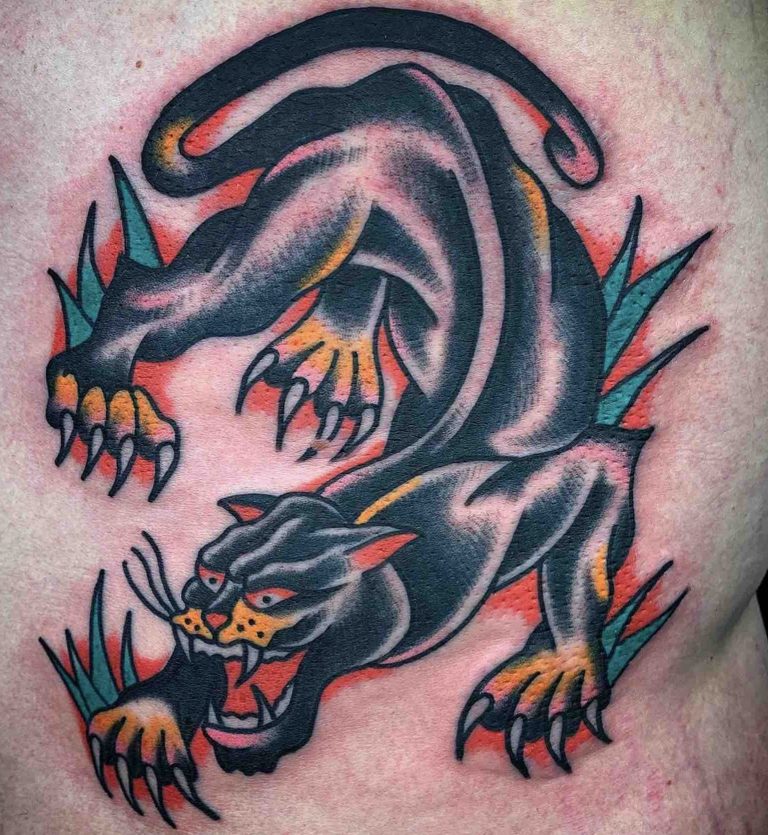
The Crawling Panther - Maybe the most common design for American Traditional Tattoos in Berlin
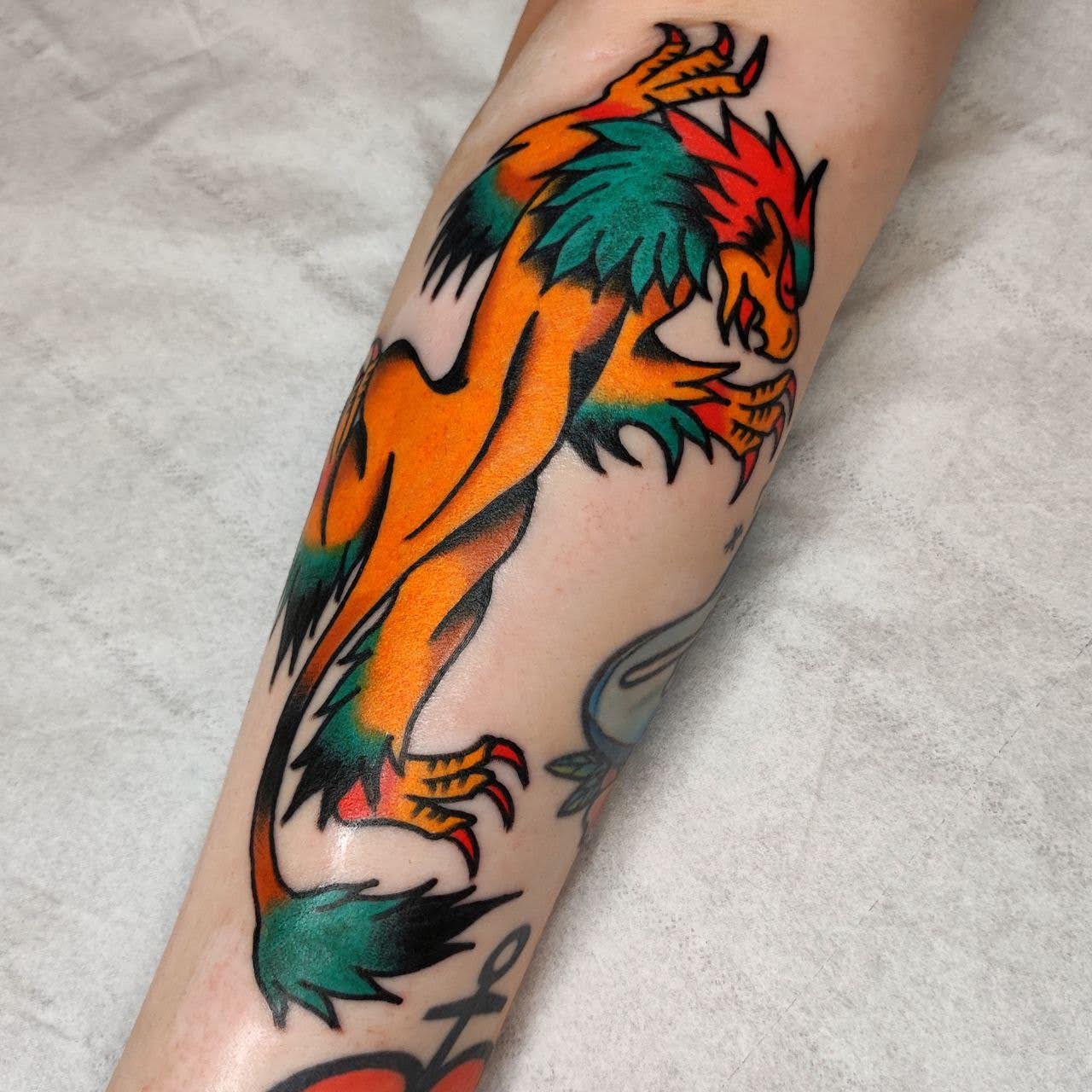
The "Crawling Panther" is one of the most technically demanding designs in the traditional canon. Originally, the crawling panther design appears in a book called Minute Myths and Legends by Marie Schubert, which was published in 1934. But it was popularized by William Grimm; the panther is usually depicted with its claws extended, tensed in a permanent state of predatory grace. It represents strength, resilience, and the ability to navigate the shadows. In a traditional context, the panther is often used as a "filler" or "cover-up" because the heavy black saturation can hide almost anything, but it is best used to "flow" with the natural musculature of the arm or leg. We have a full article exploring the origins of this timeless design for you at Tattoo History: The Crawling Panther Tattoo.
The Clipper Ship
The Clipper Ship represents the "Call of the Sea" and the desire for adventure, but historically, it was a "Homebound" symbol. For a sailor, a ship with full sails meant they were on their way back to port. In the modern Berlin context, it represents navigation through life’s storms and the commitment to one’s journey.
The Battle Royale
A "Battle Royale" is a massive, complex composition featuring a struggle between three titans: the Eagle, the Snake, and the Dragon (or sometimes a Panther). This design represents the eternal struggle of life—the conflict between the heavens (eagle), the earth (snake), and the mystical (dragon). It is the ultimate test of an artist's ability to balance heavy black shading with skin-tone "breaks." If an artist can execute a Battle Royale, they have mastered the craft.
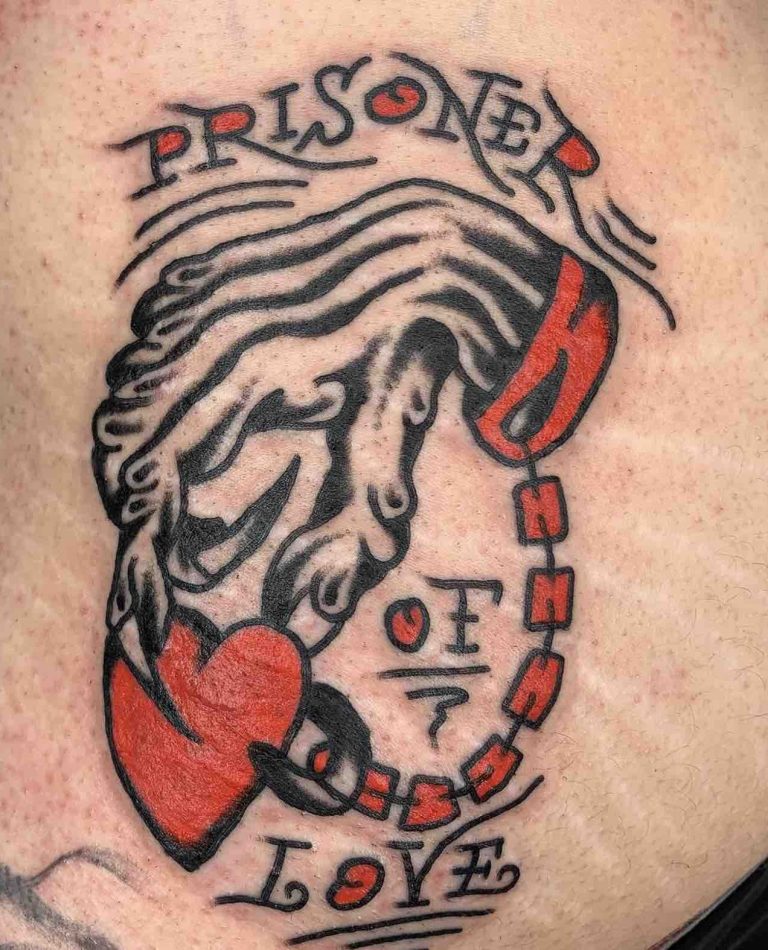
Prisoner of Love
The "Prisoner of Love" is a visceral symbol of devotion and the inescapable weight of commitment. While sometimes depicted as a pin-up, one of the most powerful and classic interpretations (frequently seen in Mariano's work) features a finely shaded hand emerging from a shackle or cuff, chained directly to a heart. It is a visual metaphor for being "bound" by affection. This design requires expert control of line weight to contrast the mechanical coldness of the chain with the organic, classical shading of the hand. It remains a staple for collectors who appreciate tattoos that balance raw emotion with rigid traditional structure.
The Rose of No Man’s Land
This motif features a nurse’s head inside a rose or a Red Cross. It originated as a tribute to the Red Cross nurses who tended to the wounded in the "No Man's Land" between trenches during WWI. For sailors and soldiers, it was a symbol of mercy, protection, and the presence of beauty in the midst of devastation. Today, it remains a favorite for those who value the history of service and sacrifice.
The Rock of Ages
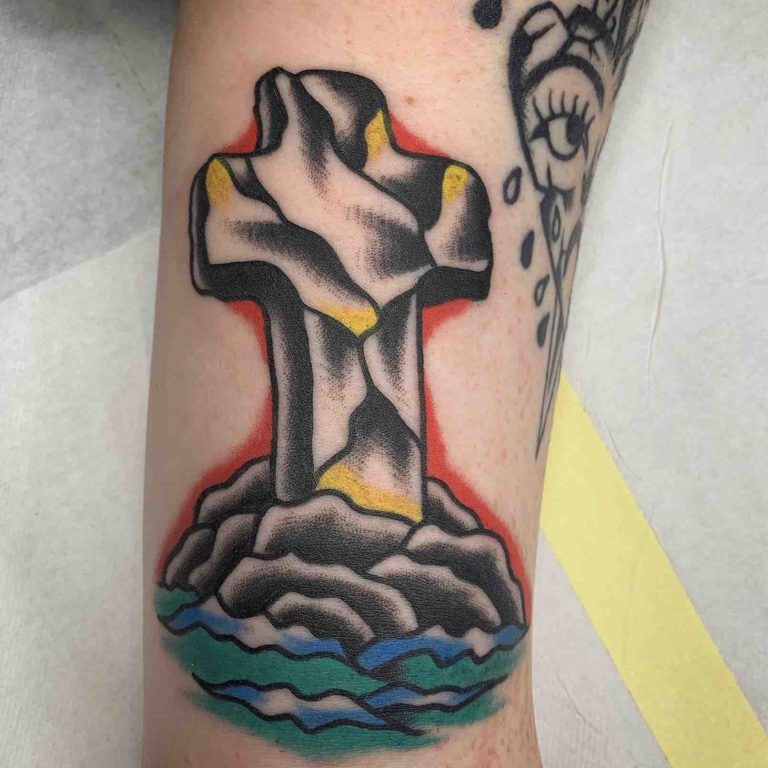
Based on a 19th-century painting by Johannes Oertel, the "Rock of Ages" depicts a woman clinging to a stone cross in the middle of a crashing sea. In the tattoo world, this became the ultimate symbol of faith, steadfastness, and finding a "safe harbor" in a chaotic world. It is a monumental design, usually reserved for backpieces, requiring a master’s touch to handle the intricate water textures and the solid weight of the cross. This classic design, like many others, is usually tattooed in different versions from the original. An example is this work by Mariano, where the woman is missing.
The Eagle and Shield
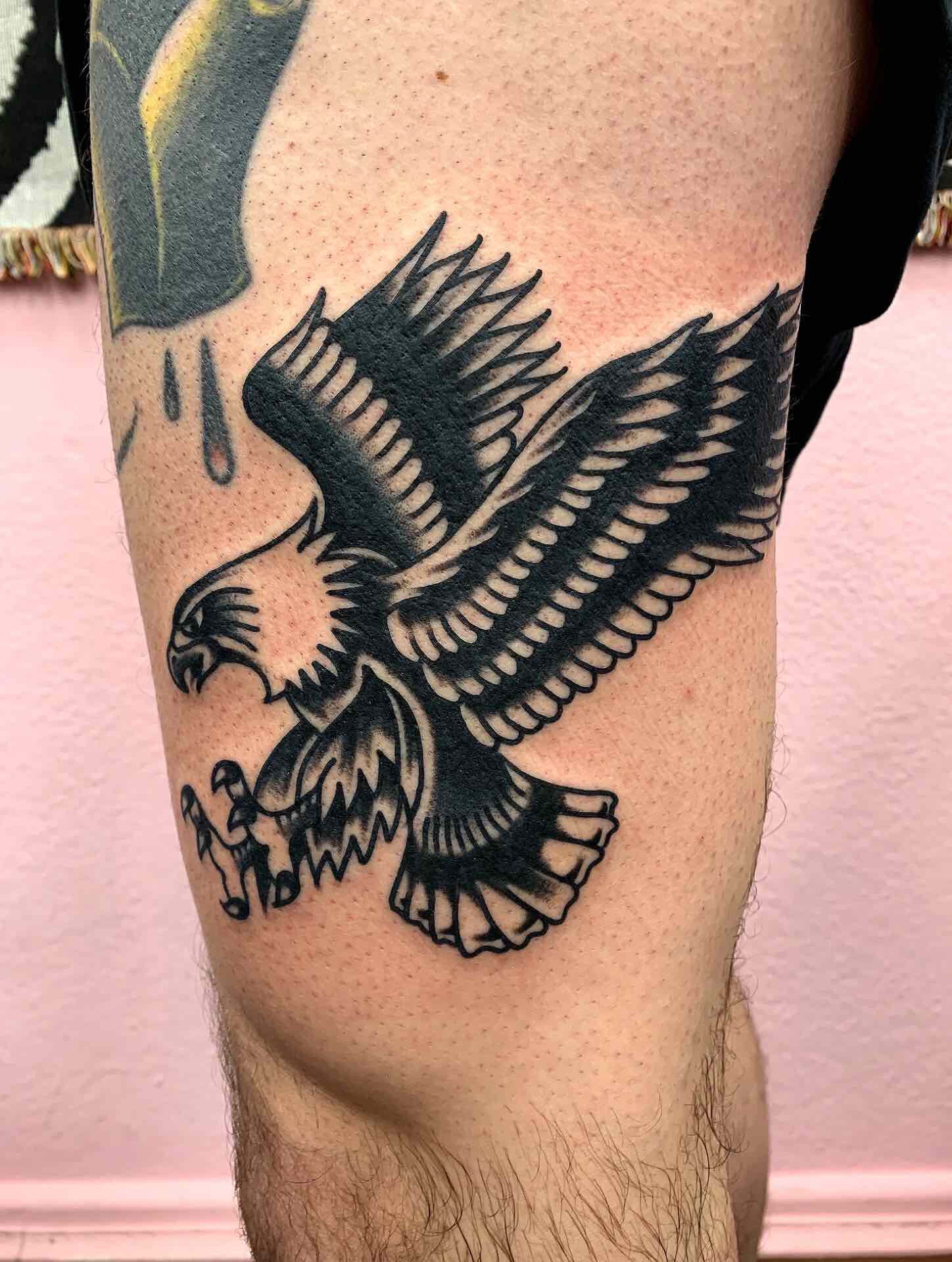
The US American Eagle is often used as the symbol of freedom, but when paired with a shield and banners, it becomes a mark of honor and protection. It is a very patriotic design, but people must remember that tattooing was popular during a time of constant conflicts, and some of the reasons why tattooing is what it is today are due to the sailors, marines, and soldiers from back in the day.
Man’s Ruin
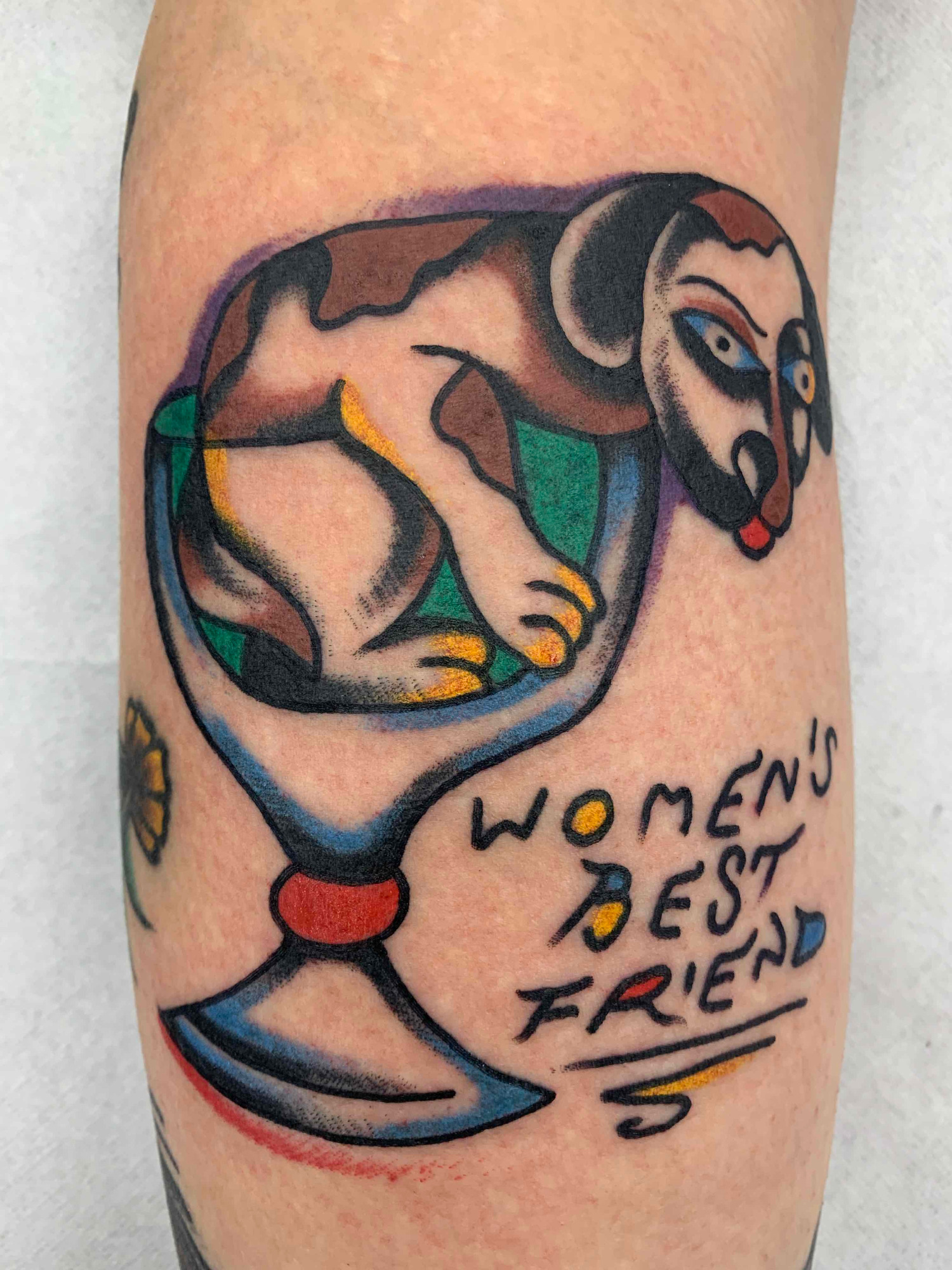
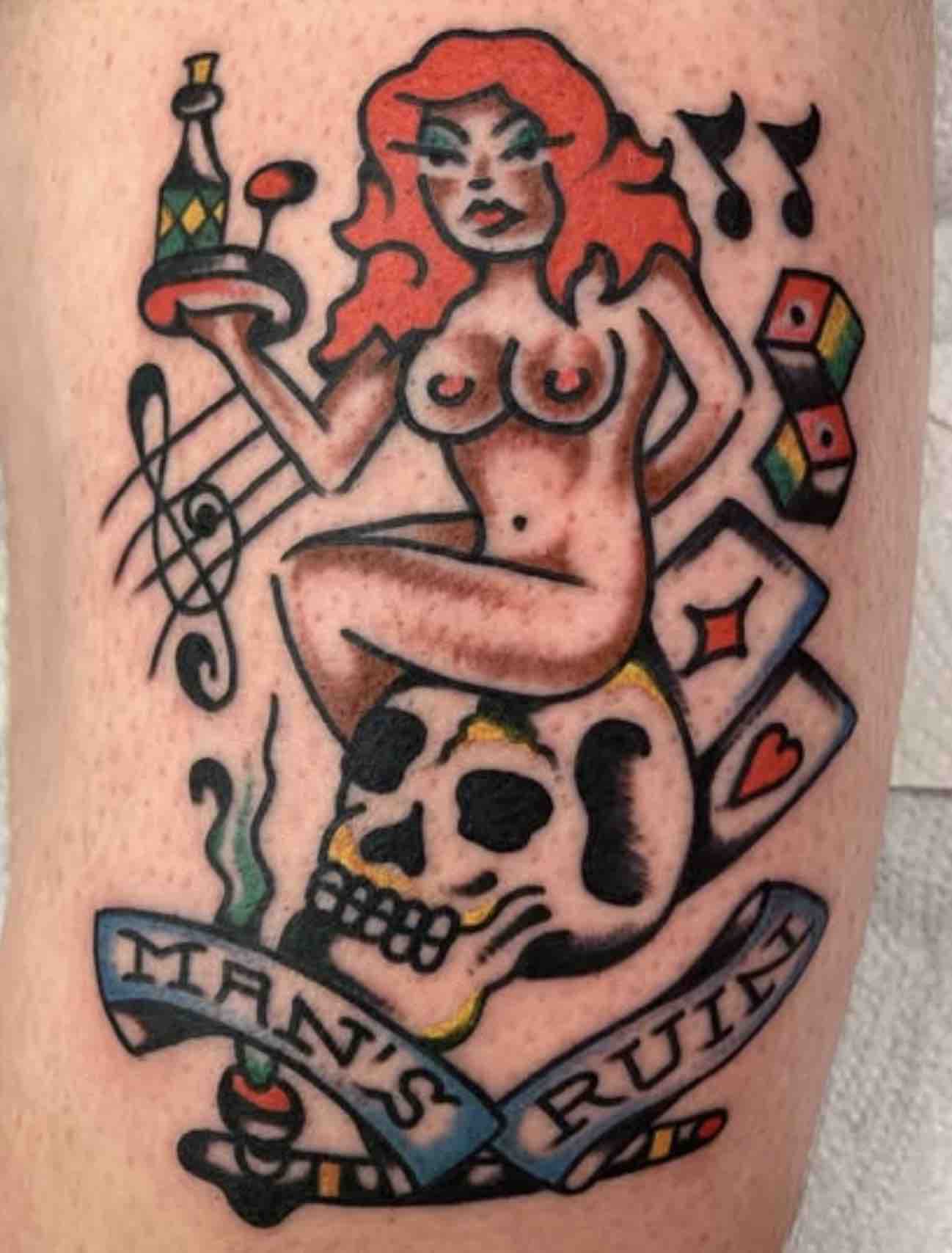
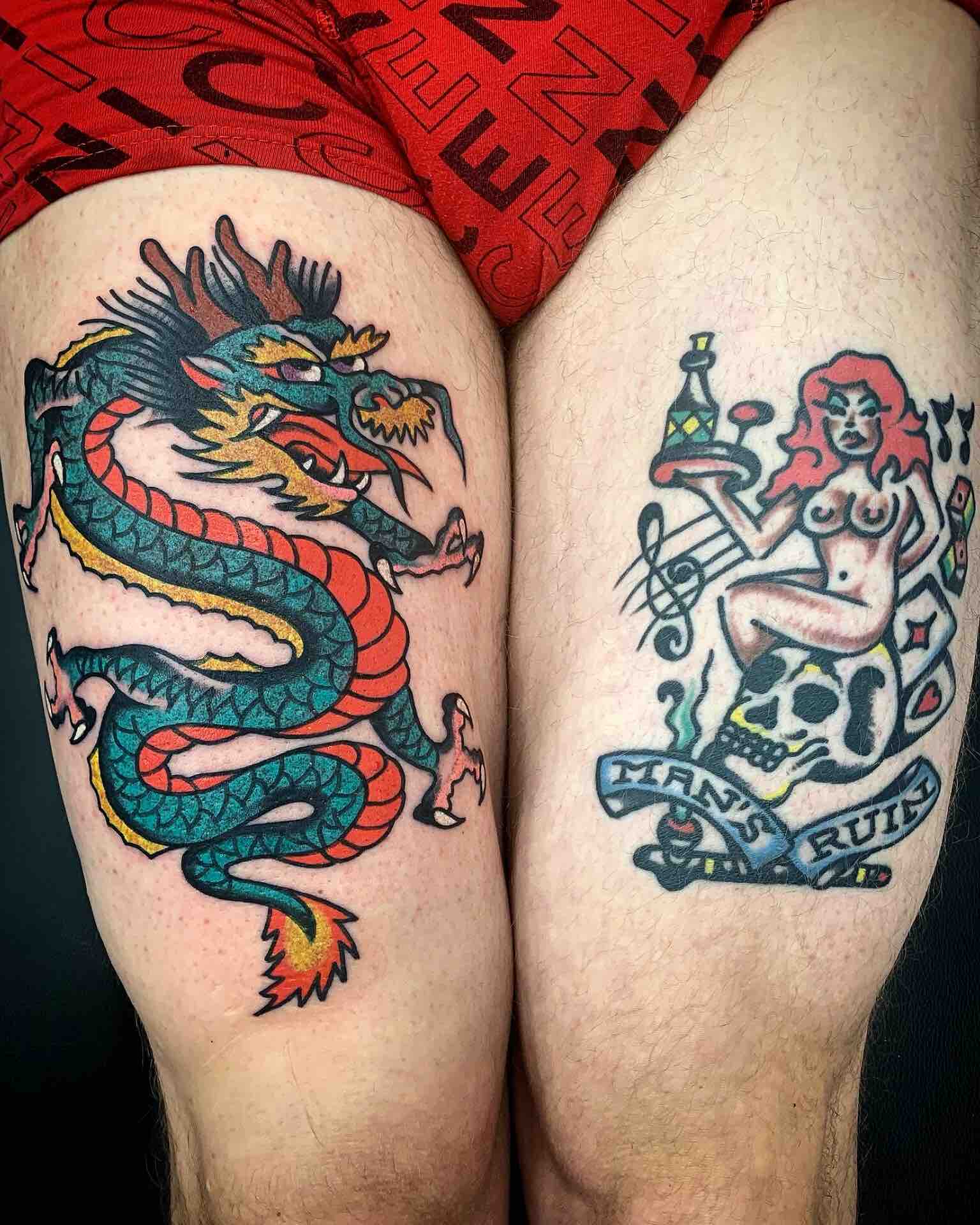
"Man’s Ruin" is a quintessential piece of traditional tattoo art that serves as a visual cautionary tale. It typically features a central figure, often a "pin-up" style woman, surrounded by the vices that lead to a man's downfall: alcohol (a cocktail in a martini glass or bottle), gambling (cards or dice), and financial ruin (money or debt). Historically, it represented the duality of desire and destruction. It is a complex, narrative design that requires an artist to manage multiple symbols in a single, cohesive composition. In the modern context, it is often chosen by collectors who appreciate the irony and the grit of 20th-century Americana. Below you'll see how classic designs can be tattooed as the main inspiration for custom tattoos, like the Man's Ruin and the Crawling Panther.
Pharaoh’s Horses - one of the most iconic American Traditional Tattoo designs
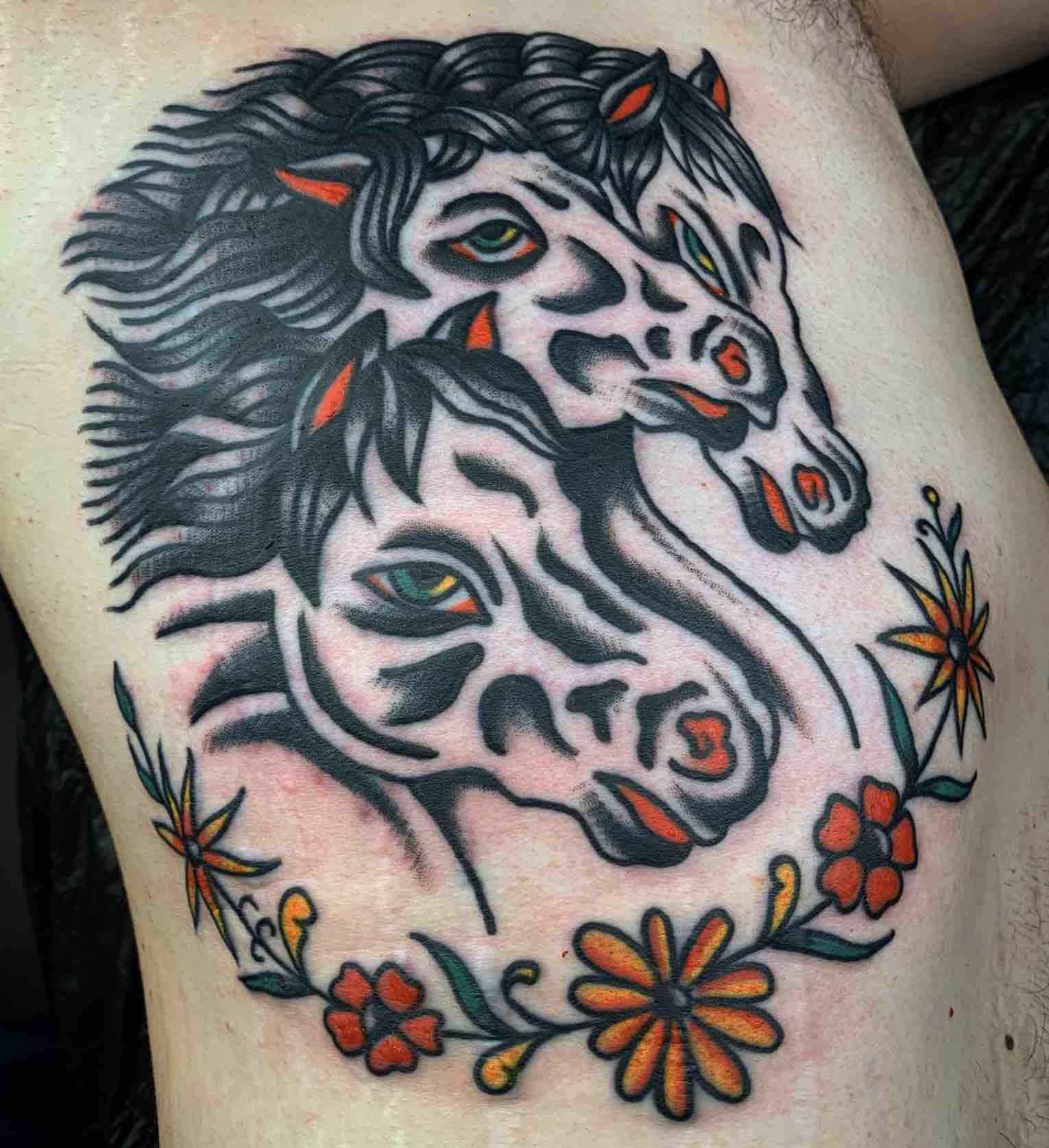
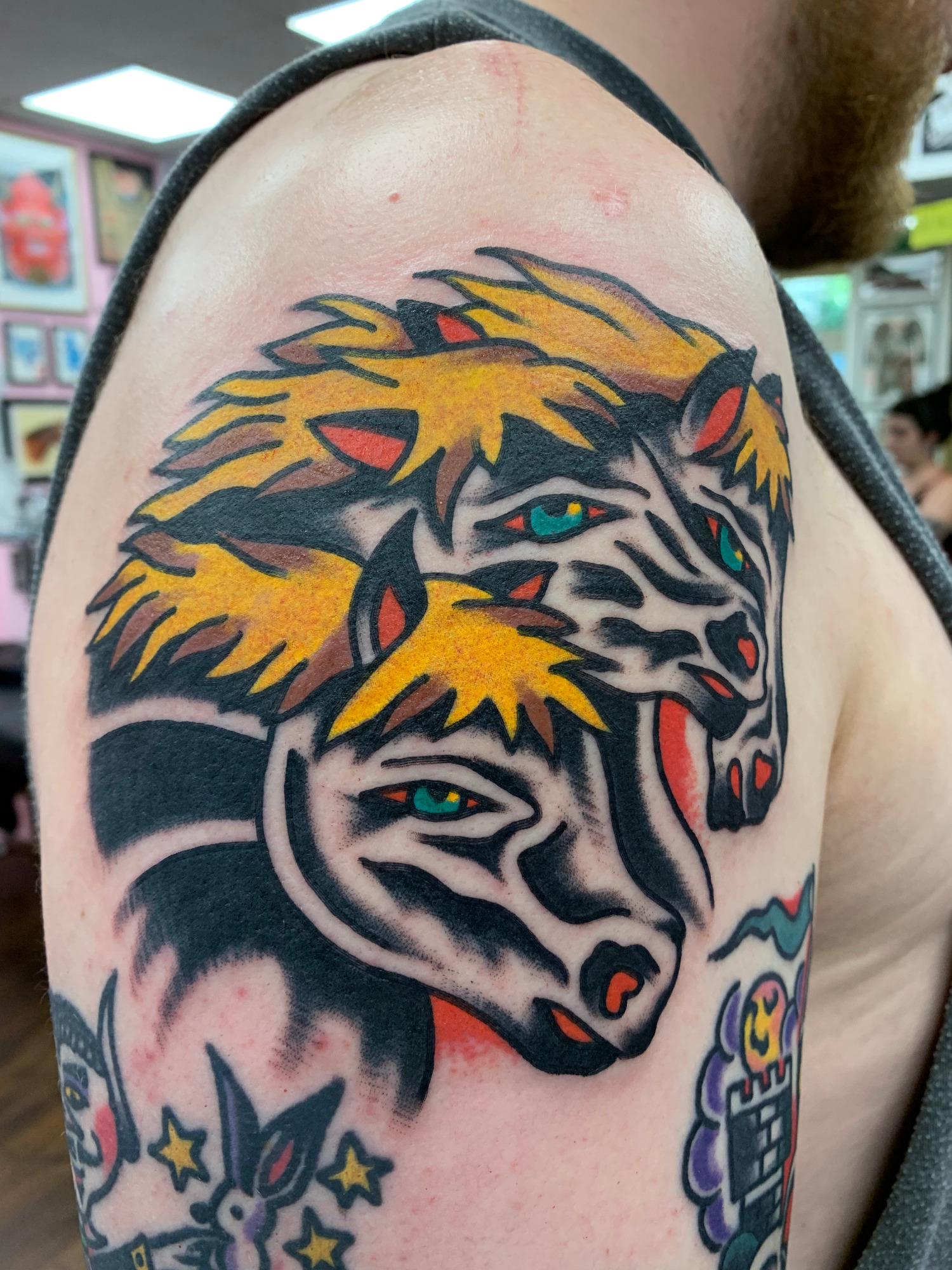
Based on the 1848 painting by John Frederick Herring Sr., "Pharaoh’s Horses" (originally titled “Pharaoh’s Chariot Horses”) depicts three equine heads in a circular arrangement, captured in various states of wild emotion—pride, fear, and power. In traditional tattoo history, it is considered one of the most prestigious "challenge" pieces. It represents the untamed spirit and the constant struggle between man and the forces of nature. You can read more about this true traditional tattoo design in our special Pharaoh’s Horses tattoo - The history behind a Classic.
Due to its circular symmetry and the need for intricate shading to define the horses' features, it is almost exclusively reserved for large-scale placements like the chest or the center of a back piece. But, of course, you’ll see a lot of modern interpretations of this classic American tattoo design done in other placements and with a twist to it.
Why Traditional Tattoos Still Matter in Berlin
Berlin is a city that values authenticity over artifice. From the industrial clubs of Friedrichshain to the classic galleries of Mitte, there is a deep appreciation for things that are "Real." It is no coincidence that American traditional tattoos resonate so strongly here.
In a scene often flooded with "fine-line" trends or "watercolor" tattoos that disappear or blur within five years, traditional tattooing stands as a rejection of disposable aesthetics. Choosing an American traditional tattoo in Berlin (sometimes called "Old School") is an act of long-term thinking. It means understanding that tattoos are not fashion accessories to be swapped out, but lifelong marks. If you're looking for such design and want information on how much your tattoo will cost or how to book a consultation with Mariano, check out our FAQ page.
This mindset attracts collectors who care about quality, history, and the "Bold Will Hold" philosophy. They aren't looking for a tattoo that looks good for an Instagram post today; they want a tattoo that looks like a badge of honor when they are eighty.
The Technical Reality: The "Bold Will Hold" Science
There is a scientific reason why traditional tattoos look the way they do. It isn't just an "aesthetic choice"; it is an engineering solution for the human body.
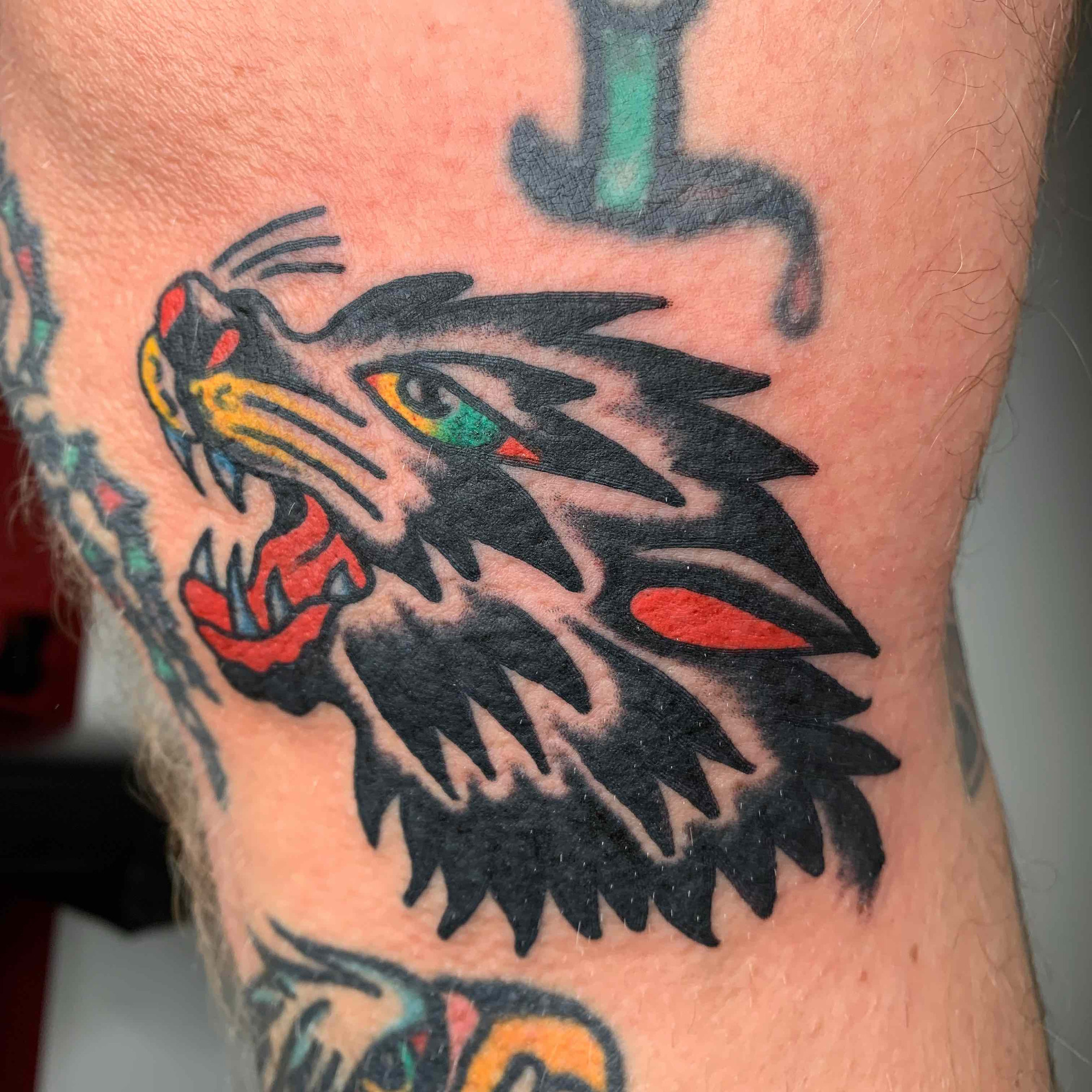
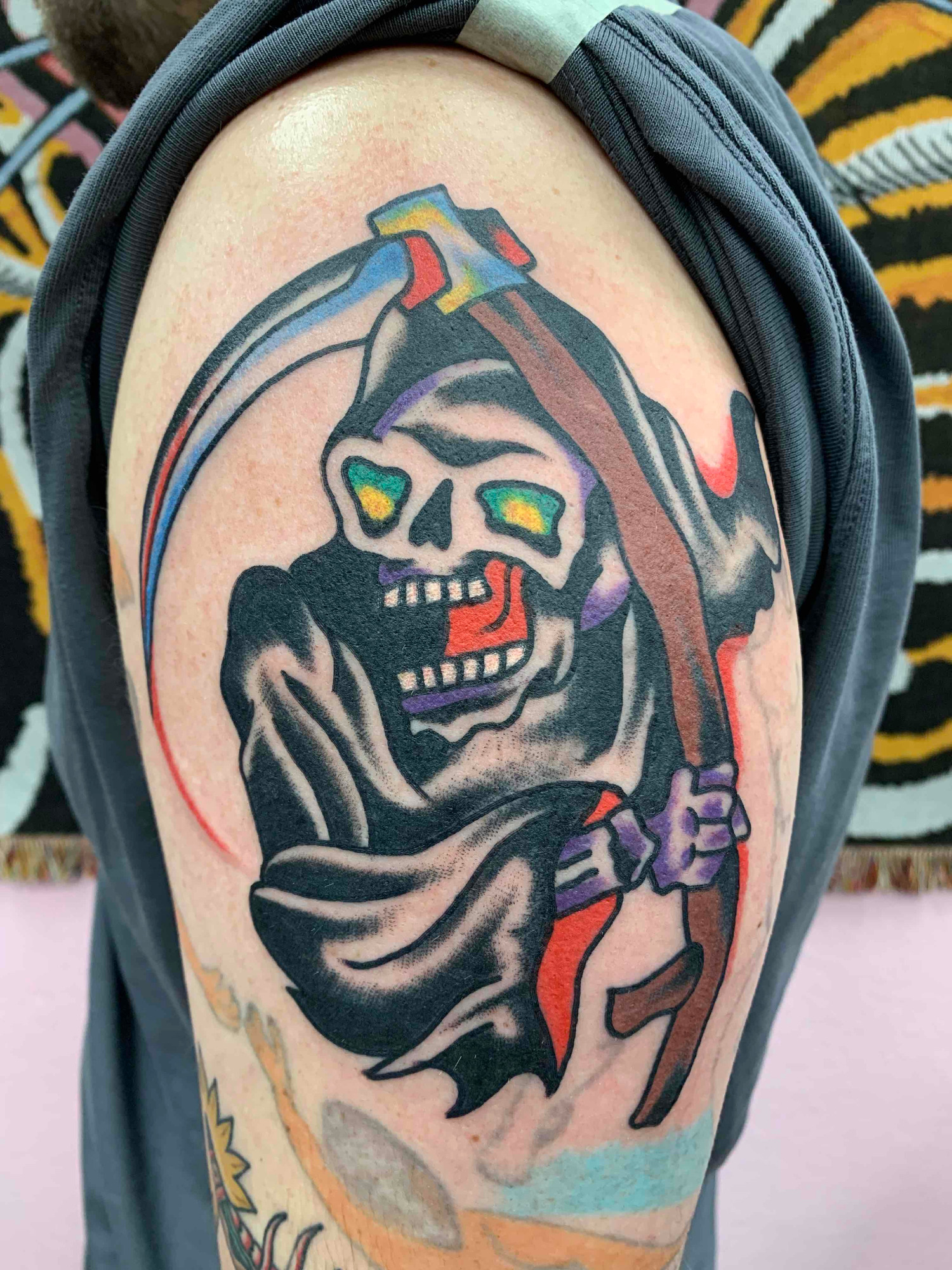
- The Black Outline: Carbon-based black ink has the largest molecular structure. When packed tightly with a "Round Shader" or "Round Liner" needle, it acts as a "dam" for the color. This prevents the lighter pigments (like red or yellow) from migrating or "bleeding" into the surrounding skin as the years pass.
- Whip Shading: This technique uses the natural "swing" of the machine to create a gradient from solid black to skin tone. This "negative space" is what gives the tattoo its three-dimensional life and ensures that the design doesn't become a "black blob" as the skin naturally loses elasticity.
- The Limited Palette: Traditional tattoos use colors with high lightfastness. Red, Yellow, Blue, and Green are some of the most used colors, and some traditional tattoo artists choose their favorite colors and tones to provide their work with a signature look. When you look at Mariano’s work on @tatsbymariano you’ll notice patterns in the color palette. That’s intentional.
At Traditional Tattoo Berlin, Mariano applies these principles to every piece. Every line is intentional and every "break" in the ink is planned. Tattooing is approached as a craft, not a product.
The American Traditional Diaspora: From Honolulu to Berlin
The journey of the style from the docks of Honolulu (Sailor Jerry) to the streets of Berlin is a fascinating one. Traditional tattooing was originally "Traveler’s Art." Sailors would pick up motifs in one port and carry them to the next. Berlin, as a global hub of art and counter-culture, has become a modern "port" for this style.
Mariano’s work reflects this global history. His tattoos are rooted in the American tradition but informed by the European masters who kept the flame alive during the decades when tattooing was taboo. His main inspirations are household names of the New York Scene like Bert Krak, but this "Continental" influence adds a layer of precision and artistic discipline to the raw power of the original American Traditional tattoo flash culture.
Glossary of the Craft: Speak the Language
To be a collector is to know the language. When discussing your project with Mariano, please understand these terms to help define the vision:
- Flash: Pre-drawn designs, usually displayed on the walls of the shop. Flash is the "Heartbeat" of traditional tattooing.
- Custom-Traditional: A new design drawn specifically for the client, but following the "Rules of the Masters" (bold lines, limited color). Mariano is a traditional tattoo artist in Berlin and all your ideas will probably be done following his style. He will advice you on what will look good and what will not look proper in 5 or 10 years and both client and artist will decide what is the best way.
Mariano often draws his flash in real paper as an exercise of precision and respect for the craft. Most artists today prefer tablets, but it is too easy to fix mistakes, too easy to get the straight lines straight and the round lines round. On paper, you have one chance, and if you’re not precise, there’s no redo. Just like in tattooing. Mariano is open to working on your idea or offering any of his available designs. You just need to book your tattoo or consultation via this form.
Booking Your Session with Mariano
If you are serious about getting an American traditional tattoo in Berlin, the process should start with a conversation. Traditional tattooing is about the relationship between the collector, the artist, and the history of the art form. Or the first-timer, the artist, and the history. Mariano prides himself on offering a relaxed and safe experience for both audiences. You can check what his clients have to say on his shop’s Google reviews.
Whether you are looking for a classic Crawling Panther to wrap around your forearm or a Battle Royale to cover your back, the execution must be flawless. There is no room for "almost" in traditional tattooing.
Booking is handled directly through the contact page, ensuring every tattoo is planned properly and executed under the highest standards of hygiene and professionalism. For more information about the history of the shop and the artist, visit the Work page or read the FAQ.
Traditional tattooing is about commitment—to the craft, to the history, and to doing things the right way. It is the gold standard of the industry for a reason. Bold will hold.