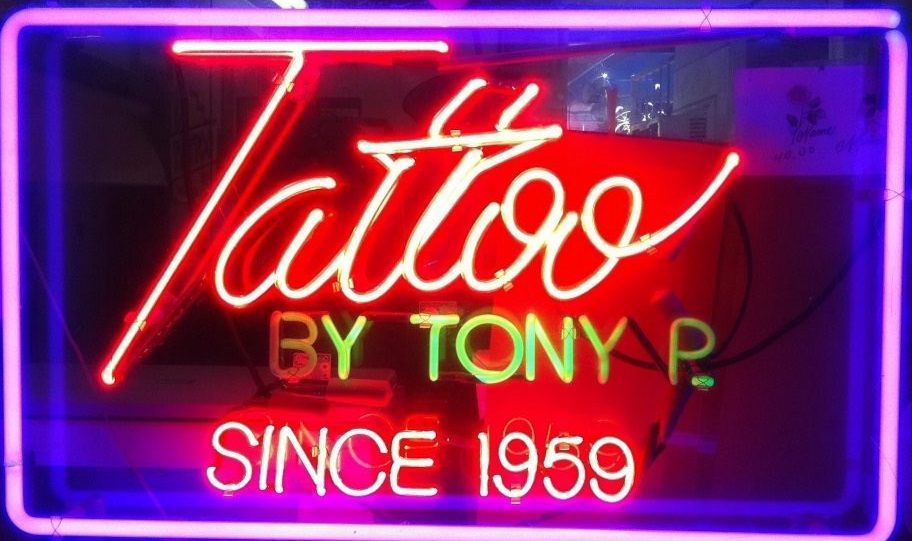
Tony Polito Tattoo History: The Survival of the Bold Line
The vibration of the coil machine frame hits the palm before the needle ever touches skin. You feel that drag of the liner through a fresh pool of carbon black and the tacky grip of the stencil on a forearm. Today, the world outside the shop window is almost unrecognizable. While people search for dated and digital trends, they want micro realism that fades in three years or anything following the ignorant style, the true art of tattooing remains in places where tradition and respect are must-haves and not optional.
For true traditional tattoo artists like Mariano, tattooing like the old masters, respecting the rules time has shown to work time and time again, remains a reality that lives and breathes in customers’ skins. Traditional tattoos are built to last. This reality is anchored in the outlaw history of the street shop.
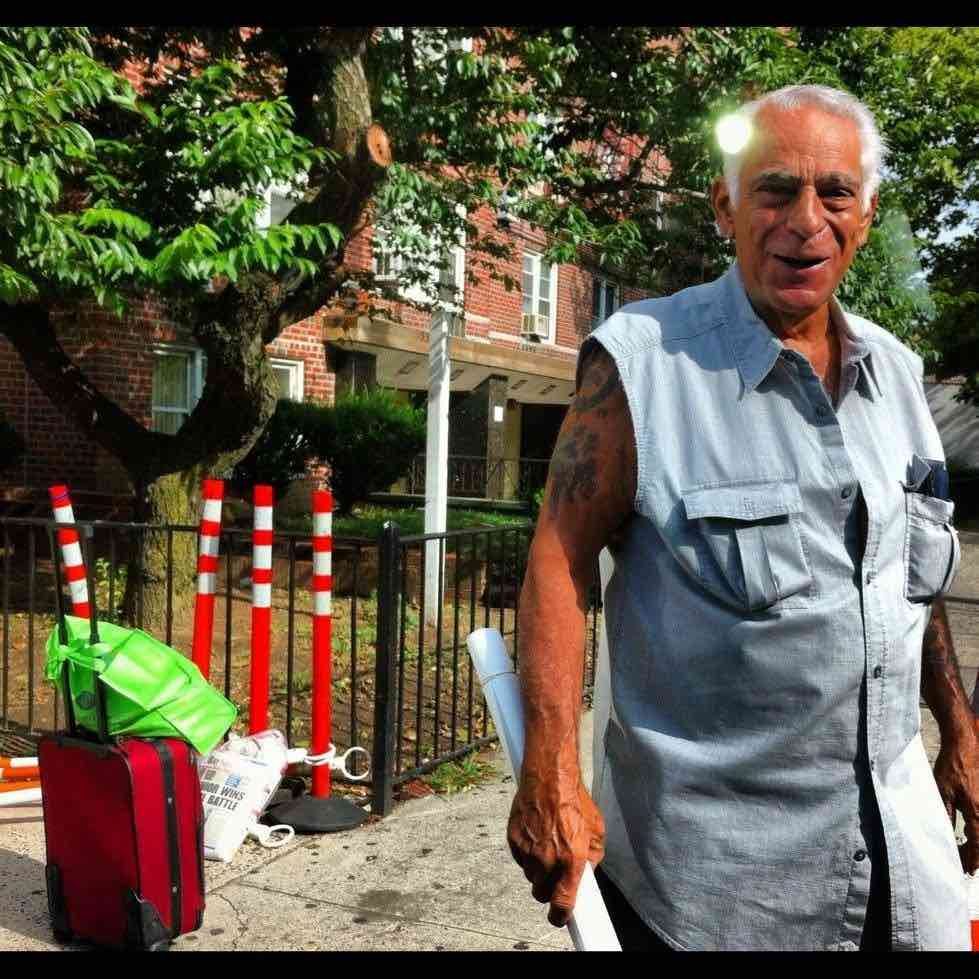
No one embodied this raw energy more than Tony Polito, a true legend of the NYC Tattoo scene and one of the biggest inspirations for Mariano. Tony Polito, or “Old Calcutta” if you might want to use his nickname, tattooed the toughest characters in Brooklyn and kept the culture alive when the city tried to erase it. He lived the tattoo prohibition during the 70s, created some of the most classic designs that everyone who loves traditional tattoos knows about, but only the true tattoo nerds know where they came from.
Mariano’s work, just like Tony Polito’s work, respects the craft enough to bring the specific heavy black and bold lines of the New York style to his private studio in Berlin Mitte. When you explore Tony Polito's tattoo history you are learning about a lineage that defines true American traditional aesthetics. Here are the most impactful takeaways from his era and why they remain relevant for serious collectors today.
Who was Tony Polito in tattoo history?
Anthony "Tony" Polito was a legendary American traditional tattoo artist who began his career in Brooklyn in 1959. He became the sole operating tattooer in New York City during the early 1970s while the practice was strictly illegal.
Operating his infamous shop out of a basement behind bulletproof glass, he mastered a high volume and bold line style. This approach defined the classic Brooklyn look and set a global standard for traditional skin art.
The story of Polito is a story of sheer endurance against a hostile system. In 1961, local officials outlawed tattooing across the five boroughs. They cited a small hepatitis outbreak, but the real goal was to control spaces the city deemed undesirable. Most artists fled the city or went deep underground to avoid prosecution. Polito stayed in the Crown Heights section of Brooklyn. He opened his shop daily after 5 PM to avoid health inspectors and local police (Tony knew NYC Health Dept closed at 5 pm and took advantage of it). He called his workspace Old Calcutta because it was a bad place for bad people.
Legend has it that it was because Old Calcutta in India was a bad place back in the days, and so was Tony Polito’s shop. He did not tattoo in a safe, nice, or corporate environment. Polito dealt, every week, with gangsters and outlaws who would wait outside his door until two in the morning. He protected himself behind a sheet of bulletproof glass because the threat of violence was constant. Brooklyn in these years was a violent and dangerous place - the whole of NYC was.
He started tattooing his teenage friends in a local park and running power from a street lamppost; he was entirely self-taught. This gritty foundation created a man who today is one of the biggest legends in traditional tattoo history.
His resilience ensured the survival of the craft. Tony Polito built his reputation in an environment that demanded absolute toughness. He understood that a tattoo shop in that era was a sanctuary for people who lived outside the law. His clients did not care about having a piece with an artistic interpretation or designs inspired by great painters or illustrators from around the world. The clientele from Tony wanted a mark of identity that proved their resilience and sometimes how dangerous they were. Tony made a name during a time when tattooing was illegal, dangerous, and unwanted. And by holding the line in Brooklyn, Polito became a central pillar in tattoo history.
What is the origin of the Tony Polito skull in tattoo history?
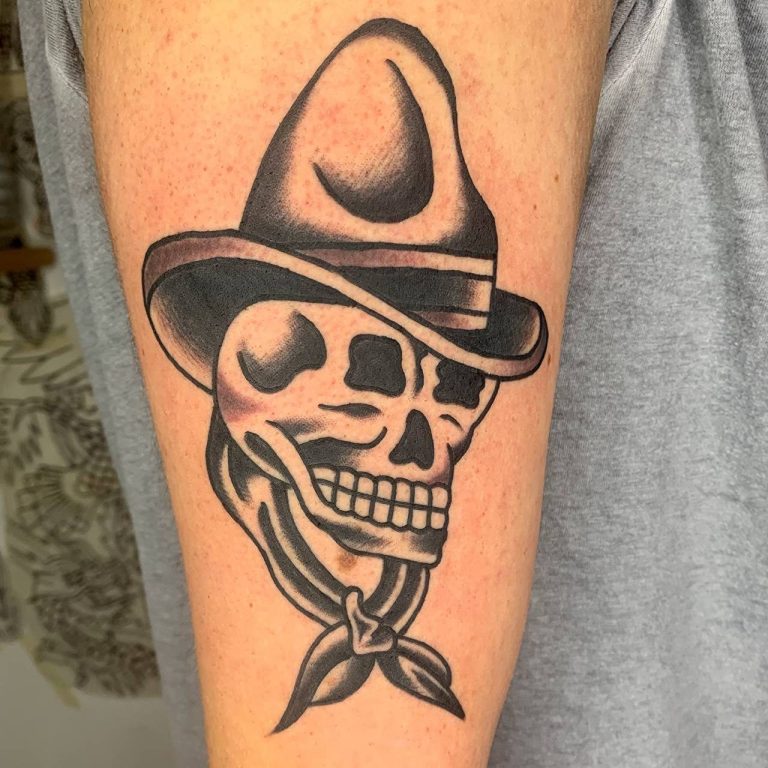
One of the most iconic designs from Tony is the skull he created, and skulls are a staple in traditional tattooing. Everyone knows this, but one big contributor to this particular design becoming what it is today was Tony Polito. The Tony Polito skull is an iconic American traditional tattoo design featuring a grinning skull wearing a cowboy hat and a knotted scarf. Originally known as the Rough Rider, this motif evolved from 1930s pulp novel illustrations.
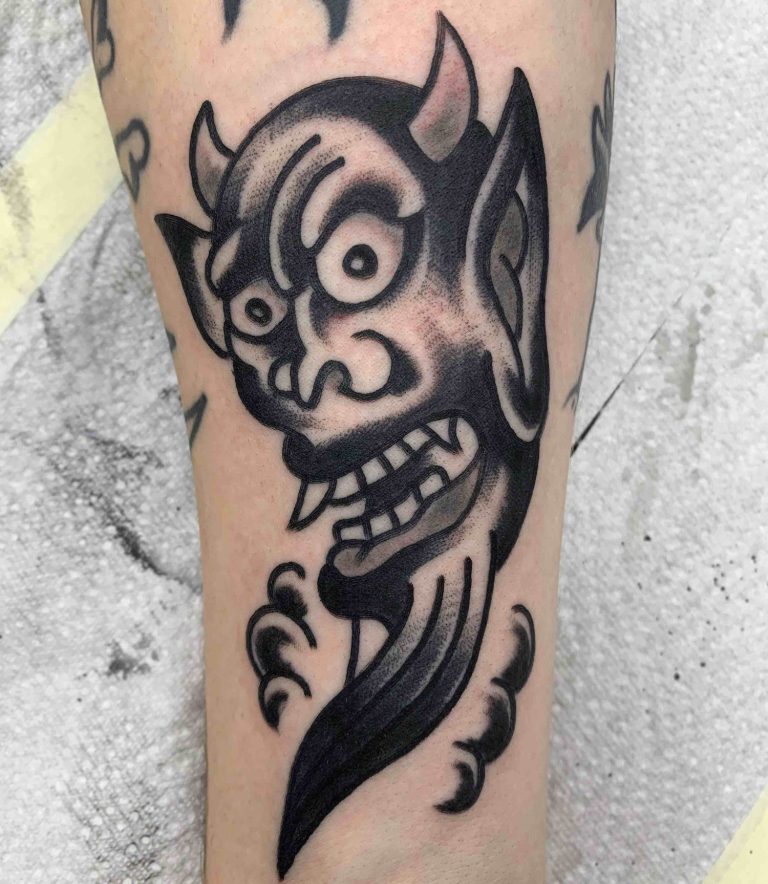
Polito popularized the design by applying it with heavy black saturation and striking contrast, much like the way Mariano’s tattoos today are. It eventually became a universal symbol of rebellion and outlaw culture after being heavily associated with his Brooklyn shop.
Many people mistakenly call this design the Crazy Sal skull. Salvatore DeMarco was a notorious criminal known as Crazy Sal, known for being a cop killer. When he was arrested and photographed shirtless for the daily news, the cowboy skull on his chest was impossible to miss, and the public immediately connected the image to Polito.
Polito hated the nickname because he viewed the criminal as a nuisance, considering him a bother. To Tony, Sal was not someone worth attaching his artwork to. To him, the design was always the Rough Rider. Outlaw historians like Jee Sanchez note that the streets were shaped by a complex underground world of gangs and subtle codes. The Rough Rider skull served as a visual marker within that world, like a sign of belonging to a specific lineage of New York gangs and toughs who operated outside the bounds of society.
Polito did not invent the Rough Rider from scratch, as the motif first appeared on the cover of a 1936 pulp novel titled Death at a Dude Ranch. It later showed up in the flash of Cap Coleman and was distributed through mail-order supply catalogs. Polito took that reference and made it his own, like today, traditional tattoo artists do. He packed it with intense black pigment to ensure the image would jump off the skin. Today, Mariano adapts these exact classic motifs for clients looking for an authentic old school tattoo in Berlin. The designs travel across generations because they are built on a solid foundation. They are symbols of a rich heritage that outlasts any temporary fad.
Above a flash from Tony Polito and below, a Rough Rider (Crazy Sal Skull) done by Mariano in 2023
How did the New York tattoo ban shape Tony Polito tattoo history?
The New York tattoo ban forced artists to work quickly and secretly, which resulted in simplified traditional designs. These motifs could be applied in minutes rather than hours to minimize the risk of being caught. By knowing the history, people can easily understand and appreciate the style more.
This underground era prioritized high contrast flash art and reliable coil machines over elaborate custom artwork. The necessity for speed solidified the highly readable American traditional style we recognize today.
During the ban years, speed was a literal survival tactic. Polito routinely completed around 40 tattoos a day. In an interview from a few years ago, he said one day he did 80 tattoos in a single day! There was absolutely no time for delicate fine line work or lengthy artistic debates about colors or placement. His shop, in a weird way, worked like an assembly line in a factory. His nephew would outline tattoos all day long while Polito moved down the line, packing in the color.
Acetate stencils were a key component of this rapid operation. Artists needed designs that were made for the trade because they relied on classic flash sheets hanging on the walls to speed up the selection process. If you have ever been inside a traditional tattoo shop and wondered why they all hang flashes on the wall (or ceiling!) in a particular way, this is why. Customers could just point to a design, pay their money, sit in the chair, and get tattooed. In Tony’s shop, Old Calcutta, lines by one and colors by the other.
This working-class approach stripped away unnecessary details and left only the essentials of the image. The era of prohibition created a unique set of circumstances that strengthened the traditionalist spirit. Without a mainstream market to please, artists focused entirely on the technical and cultural aspects of their work. When you respect the craft, you understand that a tattoo machine is a tool for legacy.
Tony Polito operated his business like a machine. He rejected the modern idea that tattooing needs to be a pampered experience. For Polito, tattoos were rough business. And this relentless production model on the streets of old New York, with thousands of his pieces, with the sheer volume of work he had, ensured that the classic Brooklyn look survived the decades of prohibition. It is a true testament to the endurance of Tony Polito and his contribution to tattoo history. But it's funny to think how much of the opposite idea was developed just a few decades later by one of the biggest names in the history of traditional tattooing, Ed Hardy. Don Ed Hardy transformed tattooing into a piece of art in full synchronicity with the human body.
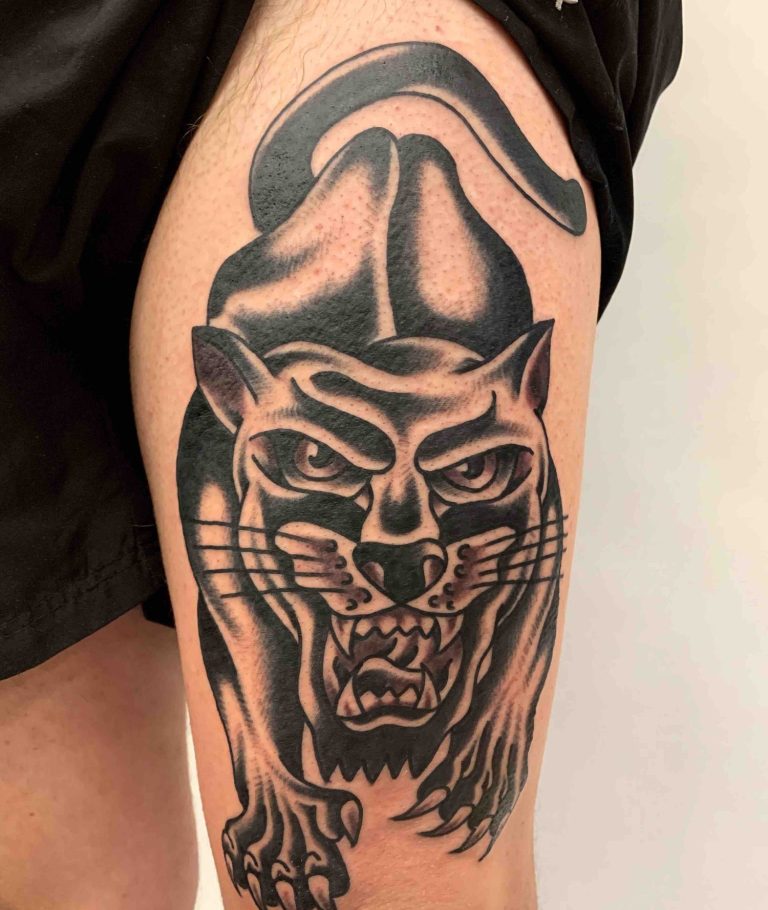
Traditional Tattoo artist Mariano reinventing Tony Polito's classic design of a panther
A Tony Polito's original flash
Tony's tattoo shop called Old Calcutta in Brooklyn, NY
Tony Polito's book 'Old Calcutta Acetate Archive'
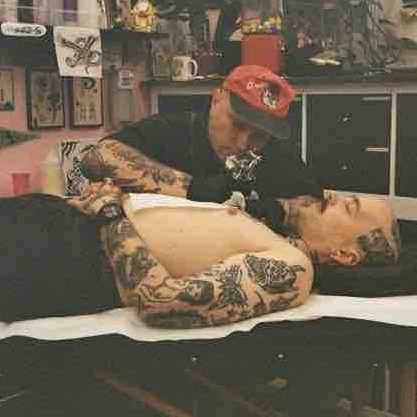
Tony tattooing
A Tony Polito's original flash
What defines the technical execution of Tony Polito's tattoo history?
The technical execution of the Polito style relies on exceptionally bold lines and heavy black shading to ensure longevity. This discipline guarantees the tattoo holds its contrast as the skin naturally ages over decades.
A defining hallmark is the use of solid color fades applied with a consistent density regardless of the subject matter. Polito also famously utilized a highly saturated yellow pigment to make his classic motifs glow against the dark backgrounds.
Polito was a master of the heavy tattoo. He understood that without proper machines and striking designs, you cannot conduct a successful business. He applied the brightest and boldest colors imaginable. He packed parrots and snakes and eagles with intense saturation to ensure they looked powerful from across the room. This aesthetic stands in opposition to fine lines or light shading that might blur over time. The New York-style look favors a raw and real appearance that reflects its underground origins. The central goal is making tattoos that look like tattoos, and the philosophy behind it prioritizes classic imagery and a bold approach that demands a high level of machine control.
Polito was also a true showman who loved to entertain his clients. He would hold up an ordinary bottle of yellow pigment and tell a wild story to captivate the room. He sometimes claimed the most absurd thighs as his special yellow was flown by intercontinental birds from Calcutta, passing through the driest deserts in North Africa and then directly over the rain forests of South America, before landing in Brooklyn. And maybe thanks to those imaginative stories, when he put that ordinary yellow into an eagle wing, it was so bright the client believed it was magic.
In reality, it was just the physics of a solid tattoo applied by a technical master. If you feel inspired by reading all this, know that true tattoo artists like Mariano still carry this exact technical standard into their own work today. The use of heavy black to create contrast and ensure the lining is deep and consistent. This method is the core philosophy behind every bold traditional tattoo in Berlin. Maybe you won’t get the tales or fables about a magical yellow, but you’ll definitely get the quality.
Tony Polito and Mike Perfeto
Tony and Richie Montgomery at the Philadelphia tattoo Convention
Where can I get a classic traditional tattoo in Berlin?
You can get a classic traditional tattoo in Berlin at Mariano's private studio located in the Mitte district. The focus here is exclusively on the bold New York-style American traditional aesthetic pioneered by artists like Polito.
The studio operates by appointment, but frequently accommodates last-minute walk-ins. It offers a highly professional and sterile environment for both serious collectors and first-time clients seeking authentic skin art.
Berlin has become a spiritual successor to the old Lower East Side vibe, or at least that is what he wants to be. While the city is overflowing with artists following the latest digital trends, Mariano is a dedicated artist where the craft is respected above profit. He offers genuine American traditional tattoos in Berlin for people who want a piece that carries the weight of true history for a price that is fair for both sides. A very small tattoo costs 100 euros, and something around a palm-sized piece costs around 250 euros. The books are always open for clients who value solid work.
To maintain a relaxed and safe experience and give Mariano the extra time to explain the healing process, decide together the best placement, colors, and all, book your consultation or tattoo over the contact form. Mariano speaks fluent English and German and can work on your idea or any of the flash tattoos he constantly posts on his Instagram @tatsbymariano. For more information about the tattoo process or the studio policies, there’s a dedicated FAQ page to help you prepare for your session.
Tony's tattoo designs
Tony working on a tattoo
Tony's tattoo designs on a original flash above and Mariano's work below
Tony Polito Tattoo History: The Conclusion
The depths of Tony Polito's tattoo history teach us that genuine art survives through immense grit and technical perfection. The underground world of Old Calcutta may be closed, but the bloodline of the New York style continues to thrive globally. Tony unfortunately passed away back in 2017, but his legacy remains.
We from Traditional Tattoo Berlin refuse to let the history of tattooing and of the street shop be erased. We remember the only rule that truly matters: Bold will hold.
Good bye, Tony
Old Calcutta, old photo
Tony Polito inside a tattoo shop
Tony Polito's flash
Real flash from Tony Polito
Tony and his wife, Bruni above and below a tattoo machine with Tony Polito's name and face
Traditional Tattooing in Berlin
In case you're in Berlin and you're looking for a traditional tattoo artist to get your own Tony Polito's design done with perfection, or even some other piece following the style developed by Tony's fast approach to tattooing, Mariano's books are always open. And to book your appointment or consultation, click on the button below.
Related Reading:
- About Mariano and the traditional tattooing in Berlin
- Getting a full sleeve in Traditional tattoo style
- Who is the best tattoo artist in Berlin?
- Tattoo history: Paul Rogers, the father of American tattooing
- American Tattoos in Berlin: A History
- Tattoo History: The Crawling Panther design
- The Pharaoh’s Horses Tattoo: History and Technical Mastery of a Traditional Masterpiece